Buffalo Central Terminal opened on June 22, 1929. Seventeen stories of Art Deco on Buffalo's East Side, designed by Fellheimer & Wagner, the same firm behind Grand Central. At its peak, it saw 200 trains and 10,000 passengers a day. The exterior was masculine and industrial, but ornate. Inside, marble walls, geometric grillwork, a restaurant with black Carrara glass counters and silver and bronze dividers that seated 250. Buffalo Central was a monument to the idea that making, building and moving things deserved beauty.
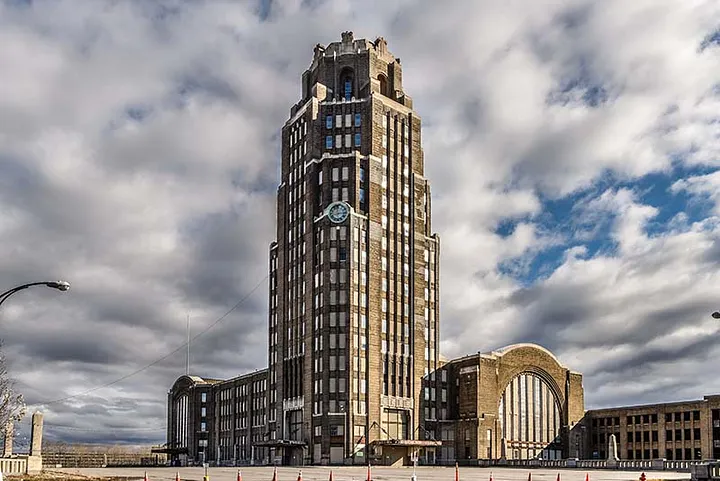
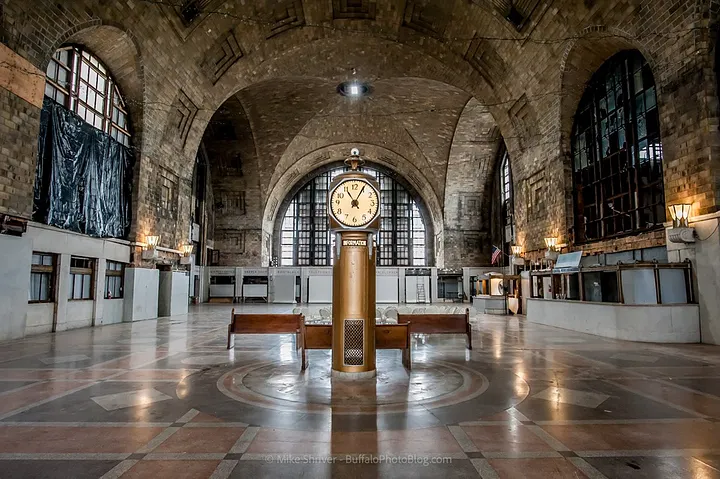
Every step of building it, from design to construction, was intentional, with no shortcuts taken between form and function. The people who built buildings like this believed that the work done inside was deserving of the architecture that housed it. The work itself was so important that our most beautiful, most permanent structures were the obvious gateway to the work happening inside.
The last train pulled out of the station early in the morning on October 28, 1979. And the terminal has been mostly vacant since. Vandals took what they could carry, and over the years, the weather did too. The restaurant with the Carrara glass is gone. The marble is still there, because marble is hard to steal. The neighborhood, unfortunately, declined with the terminal, as neighborhoods do when their center of gravity disappears.
But Buffalo Central Terminal is still standing. When you look at it in 2026, you might feel some nostalgia or wonder what it looked like in the past, but the building did not fall. It is still there. It was not poorly designed or cheaply built. It was built so well that nearly a half-century of abandonment has not brought it down. The bones are extraordinary, the vaulted concourse intact and on display. The tower still rises seventeen stories over the East Side and stands as a reminder to us all about our capability.
The infrastructure did not fail, even when the system of people and cultural priorities that justified the infrastructure's existence did. Trains stopped arriving and passengers no longer showed up. But the marble building is still there, waiting for the day that the trains and passengers return.
This is not a story about a train station. Or it is, but only in the way that every shuttered factory and half-empty vocational school from the last 30 years is a story about a train station.
Not so far from Buffalo, in Erie PA, I attended a metalworking bootcamp put on by METAL for America. The instructors at the bootcamp all had decades of experience in foundries, machine shops, forges, etc. And you know, it feels like I've stood next to America's Central Terminal.
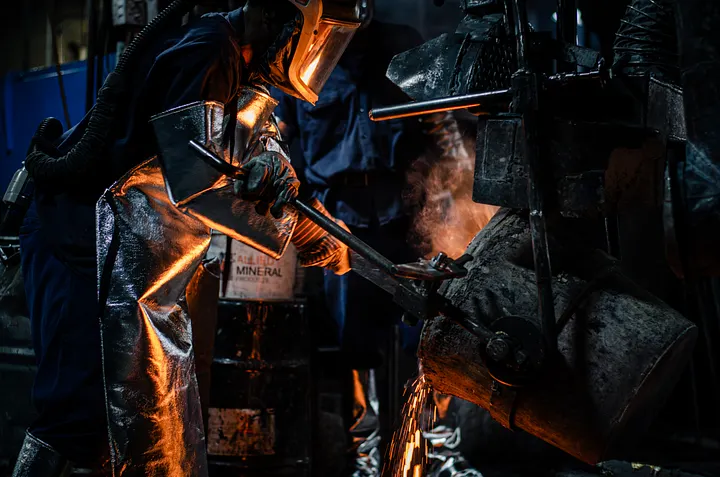
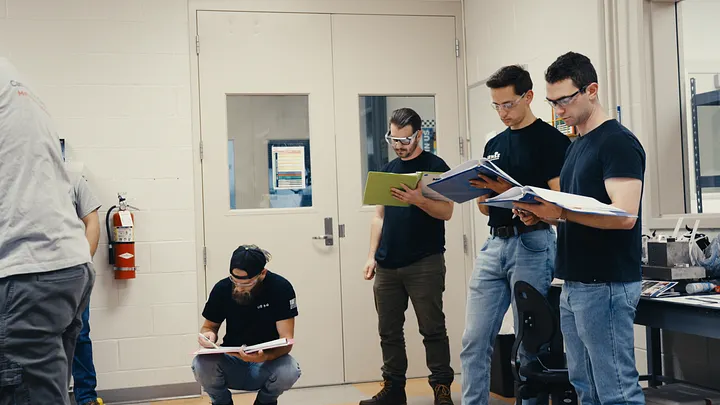
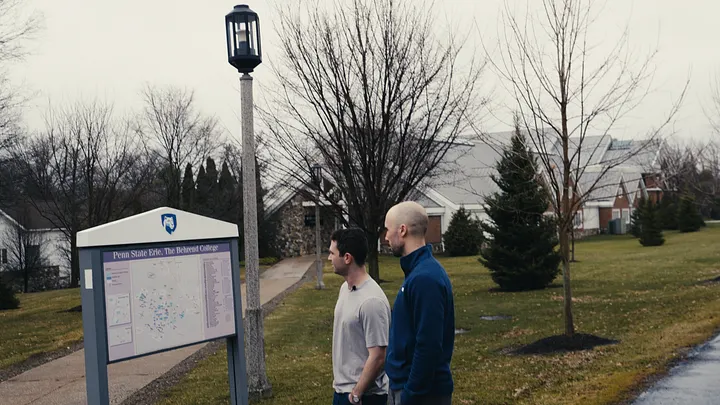
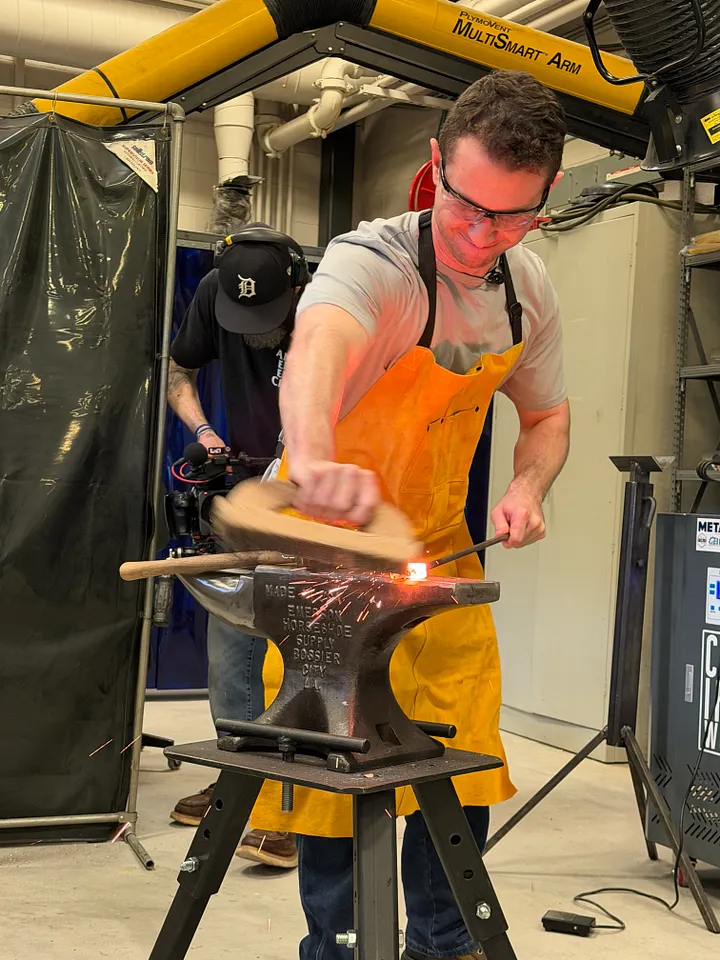
These guys did not learn their craft in a classroom. In most cases, there was no curriculum. A man who has been pouring bronze for thirty years learned by standing next to one who had been pouring bronze for thirty years before him. Watching, trying, failing, watching again. Over time, tacit knowledge is earned through proximity, repetition, and a patience that cannot be bought. The teachers understand this because they were once students. Just like metal, new industrialists are forged with heat, pressure and time.
Many of the men and women who carry this knowledge are well into their 70s and 80s now. And they are still showing up (I've met them). They've long since earned the right to stop, but they don't. They have an infectious sense of pride in what their hands and minds can do that no machine and no manual can replicate. These are people who have spent a lifetime getting good at something hard, and that means something to them.
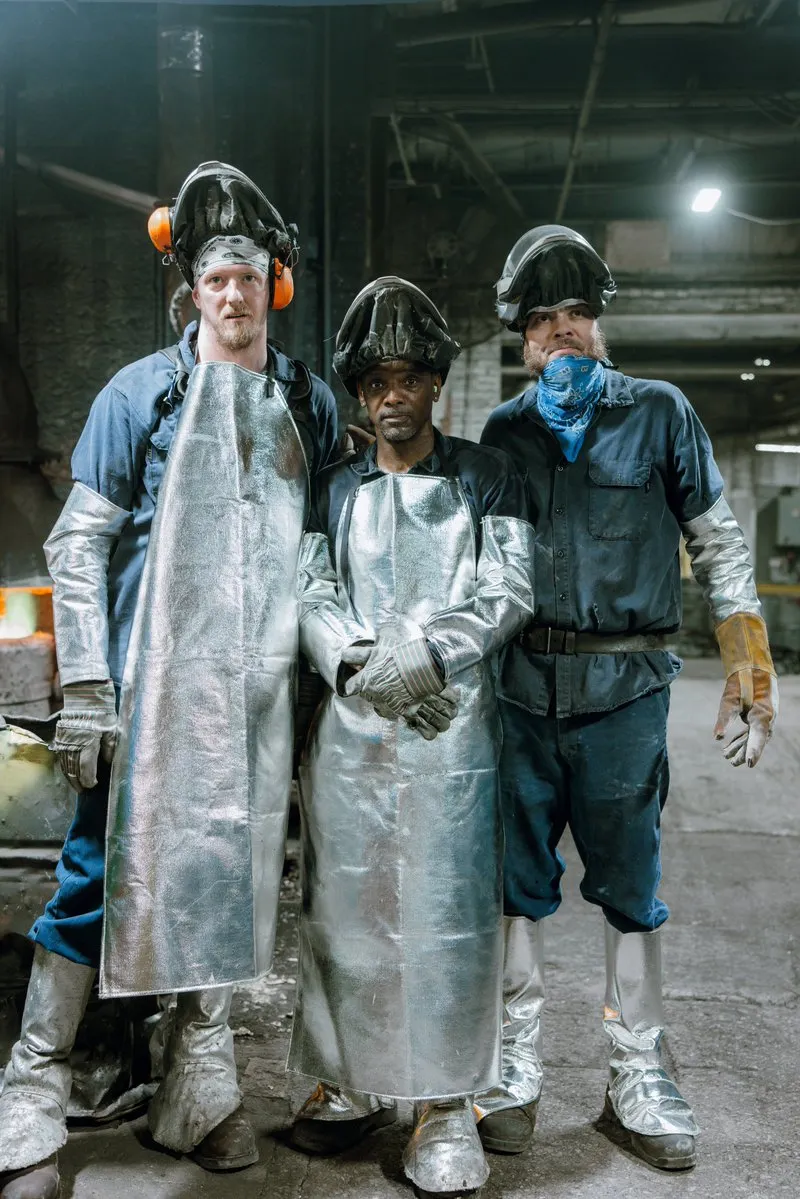
They know that what they carry does not exist anywhere outside of them. You cannot explain to someone the sound a machine makes when it's time to repair it, or the color of the metal when the temperature is just right.
The marble in Buffalo Central Terminal survived because it was hard to steal. The "tribal" knowledge in America's industrial base — the muscle memory, the craft, the intuition built across generations — is hard to steal too. And fortunately for us, it is still here. For now. In America's factories, in the hands of people who know what it's worth.
The Terminal watches over Buffalo's East Side. And they are here, watching over our factories, and waiting for someone to walk back through the door.